
Stop Picking Formats Off a Spec Sheet
Most media plans get this backwards. They start with the format's spec sheet, dwell time, footfall, reach, and work forwards to an audience. Flip it. Start with the moment: what is this person doing with their hands, their eyes, their attention, right now? A phone-scrolling commuter, a pharmacist's customer mid-conversation about their chest infection, a table of mates three pints in, someone alone in a washroom with nothing to look at but the wall. Four completely different people, four completely different jobs for a message to do. Pick the format that matches the job, not the format with the biggest number on the media pack.
Two different jobs, not a hierarchy
Our four hero formats split into two families, and neither one is the junior partner. Direct-to-Hand, coffee cups, pharmacy bags, beer mats, physically puts the item in someone's hand. No algorithm decides whether they see it. No ad blocker gets in the way. The only variable left is whether the creative is good enough to earn a second look. Captive Attention, washroom panels, plays a different game entirely: no handover, but something far scarcer in 2026, a stretch of time where a person has genuinely nowhere else to look. Reach versus depth. Guaranteed impression versus guaranteed read. Neither wins. A plan that only chases reach ends up shouting into a crowd. A plan that only chases dwell time never gets scale. The good plans use both, deliberately, for what each one is actually built to do.
Coffee cups: you're not persuading anyone, you're riding along
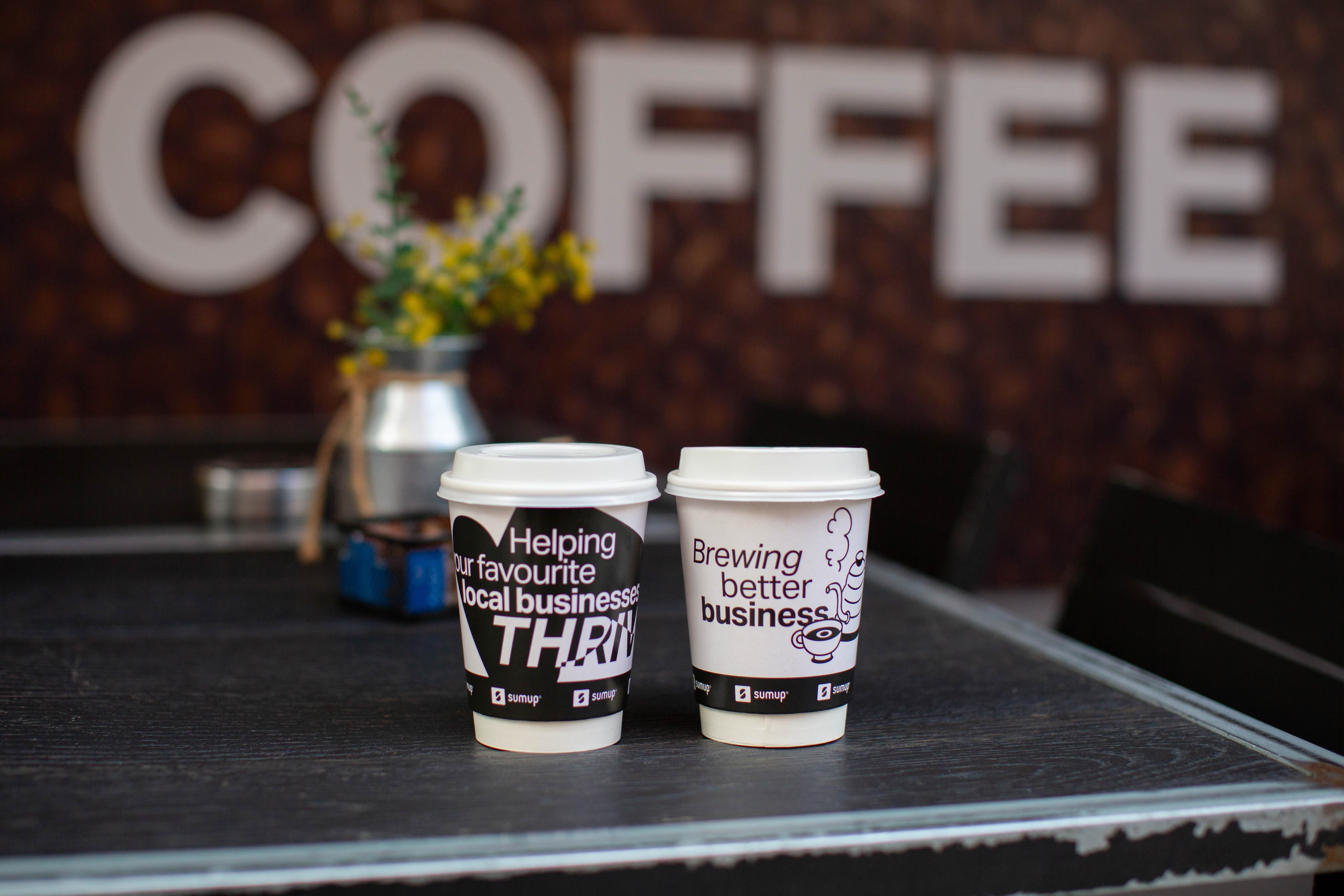
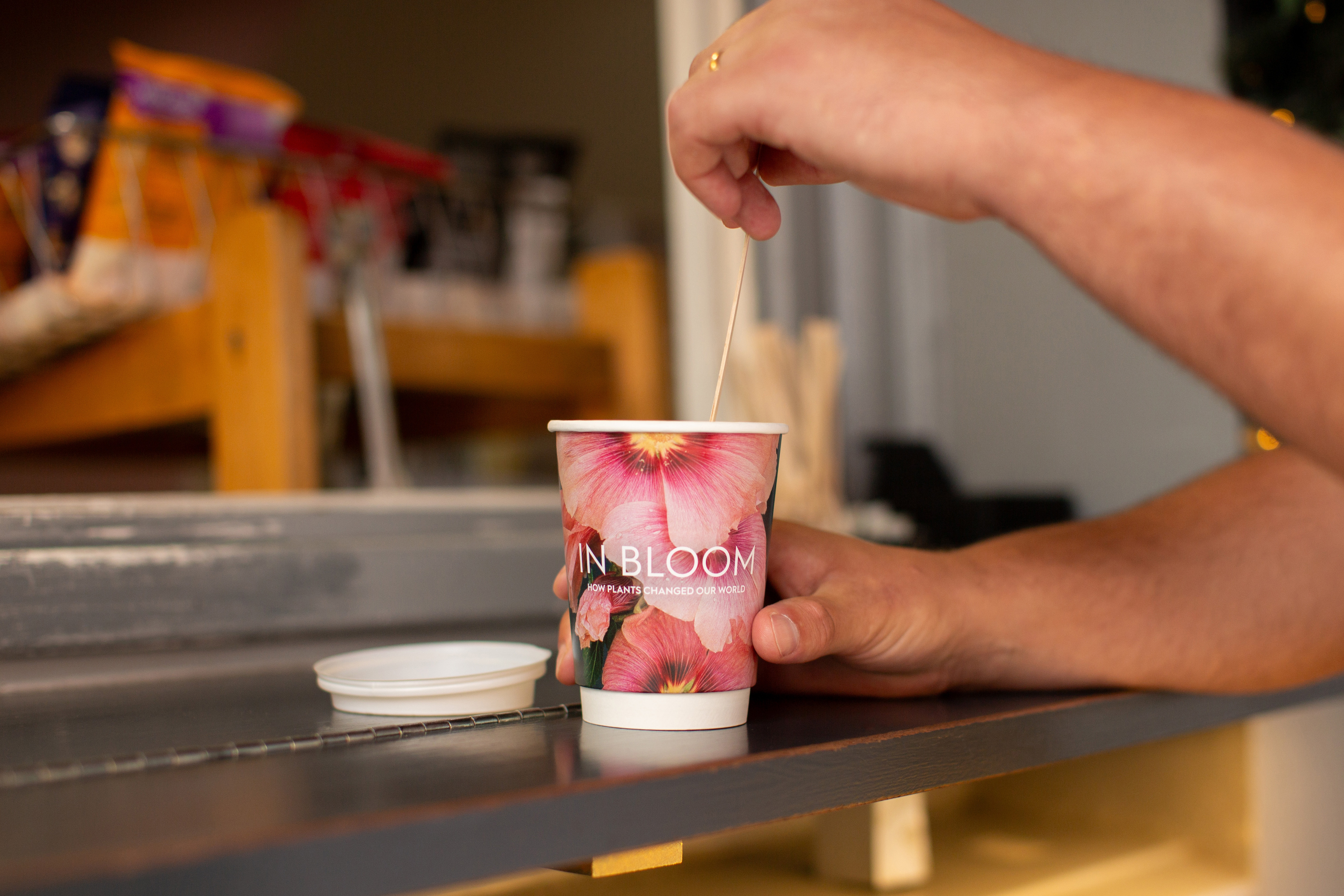
Nobody stands at a coffee counter weighing up your brand. They're half-asleep, running through the day ahead, cup already in hand before the thought's finished. That's not a weakness, it's the whole point. This is not the format for a message that needs convincing. It's the format for a message that wants to be seen twice without asking permission: sixty-five percent of cups are bought in the morning and held for 21 minutes, long enough to register more than once, and a tear-off voucher turns an idle 21 minutes into an actual next step. The audience is also quietly premium, 52 percent more likely to carry high economic and cultural capital, which is why this format earns its keep on lifestyle and subscription brands, not bargain-bin offers.
Pharmacy bags: you're not the one they trust, the pharmacist is
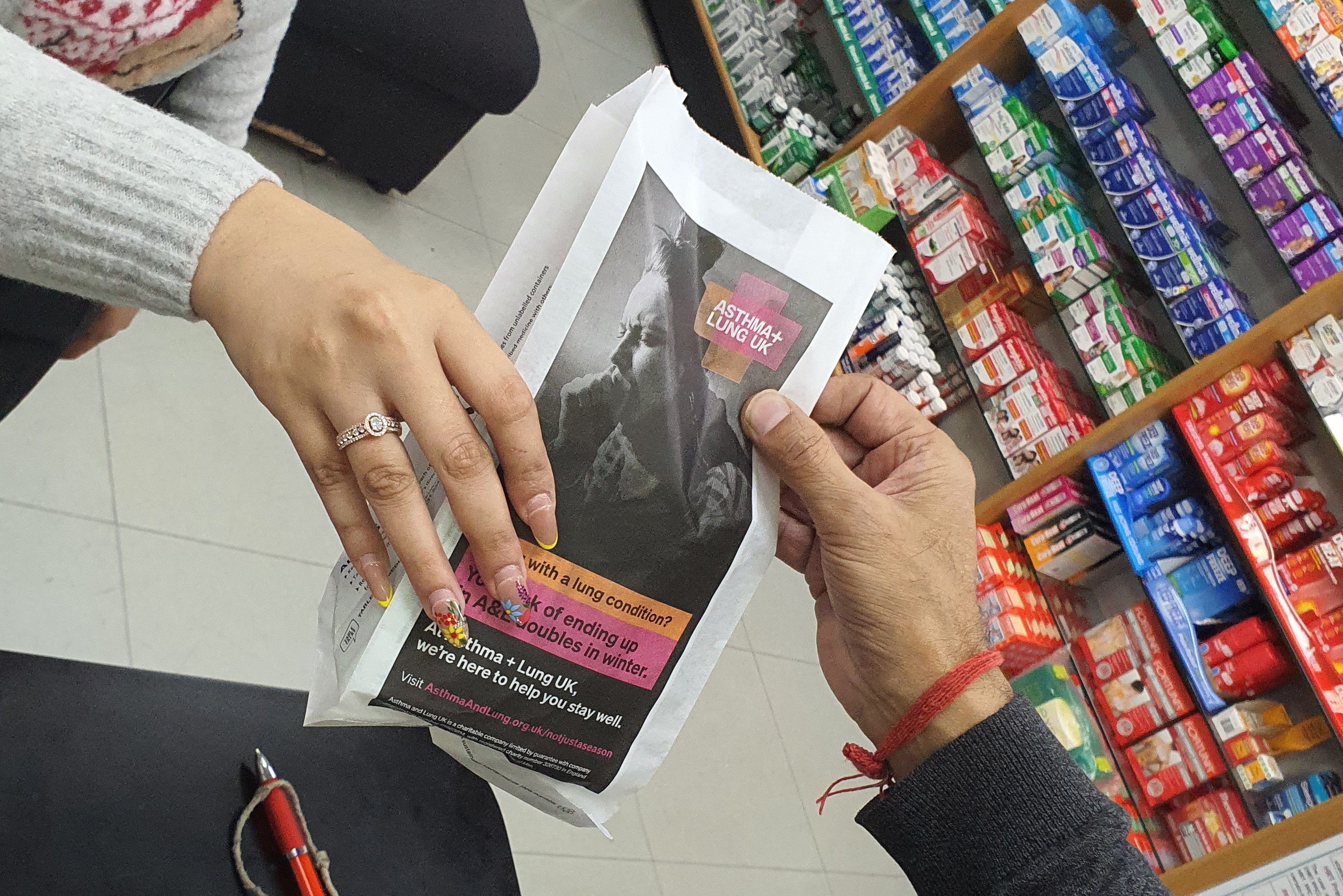
Forget the bag for a second. The real asset here is the person handing it over. A pharmacist has spent years being the person people trust with things they won't tell their own family, which is a large part of why 95 percent of people trust pharmacists more than most professions going. Put your message on that bag and you're not buying space, you're borrowing credibility that took decades to build and that no billboard will ever have. That's why this format carries weight nothing else in the portfolio does for health, wellbeing and anything genuinely sensitive. And it doesn't stop at the counter: 60 percent of bags go home, landing in front of someone who never set foot in the pharmacy, often the person actually making the decision.
Beer mats: the message that gets argued about
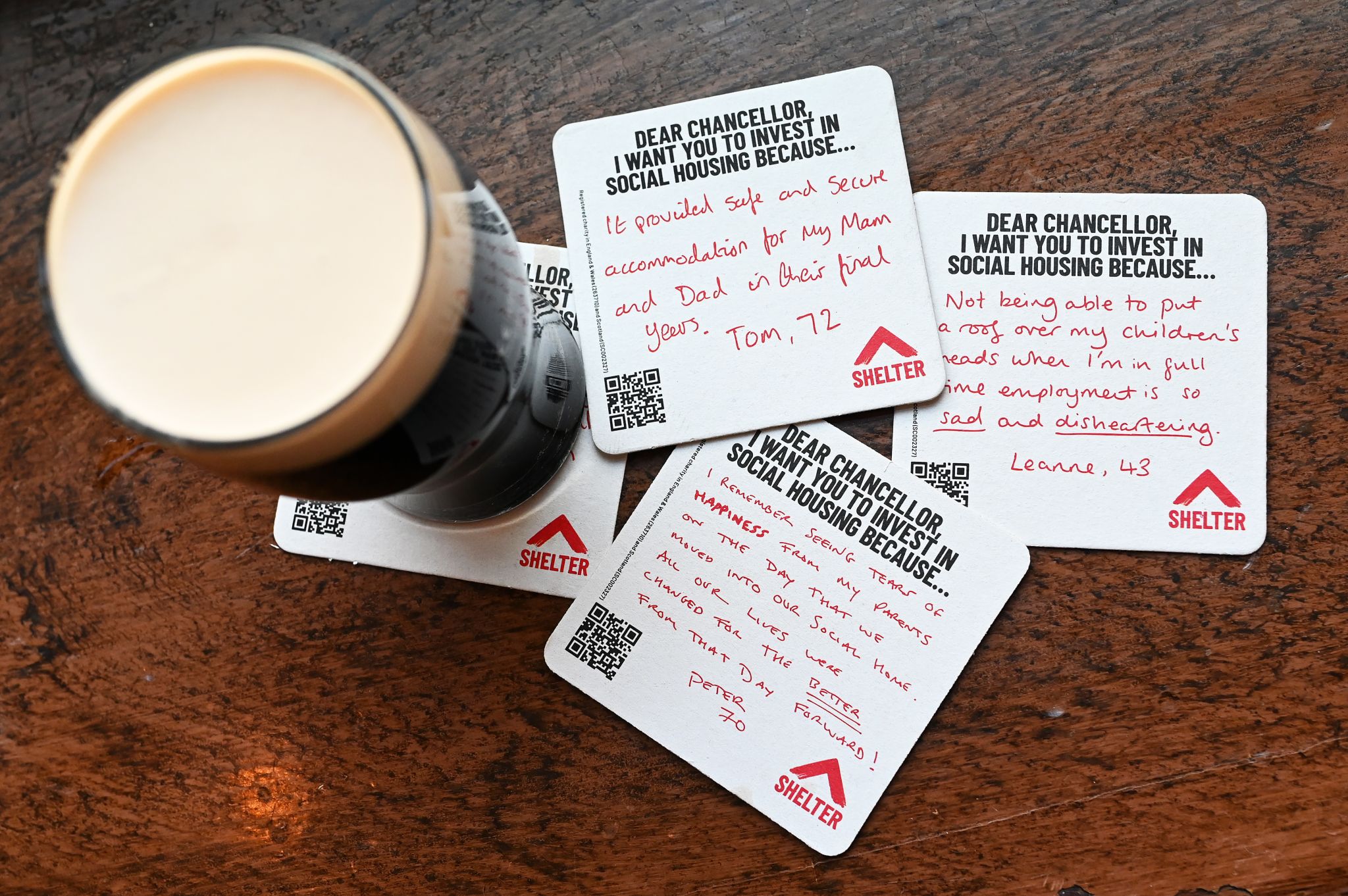
A poster gets glanced at once and forgotten. A beer mat gets picked up, put down to make room for the next round, picked up again, slid across the table because someone wants a second opinion. That's not incidental, it's the entire mechanism. Testimonials get read aloud. QR codes get scanned because someone's bored between rounds. Opinions get formed, and argued over, before last orders. Run more than one design and you're exploiting exactly this: a table that's seen one mat wants to know what the others say. Pubs and bars hand you a genuinely broad crowd too, near enough an even split by gender and spread across every age bracket, for more than 12 hours a day, which is why this format works as hard for a housing charity's testimonial campaign as it does for a lager brand's summer push.
Washroom panels: the one moment nobody's distracted
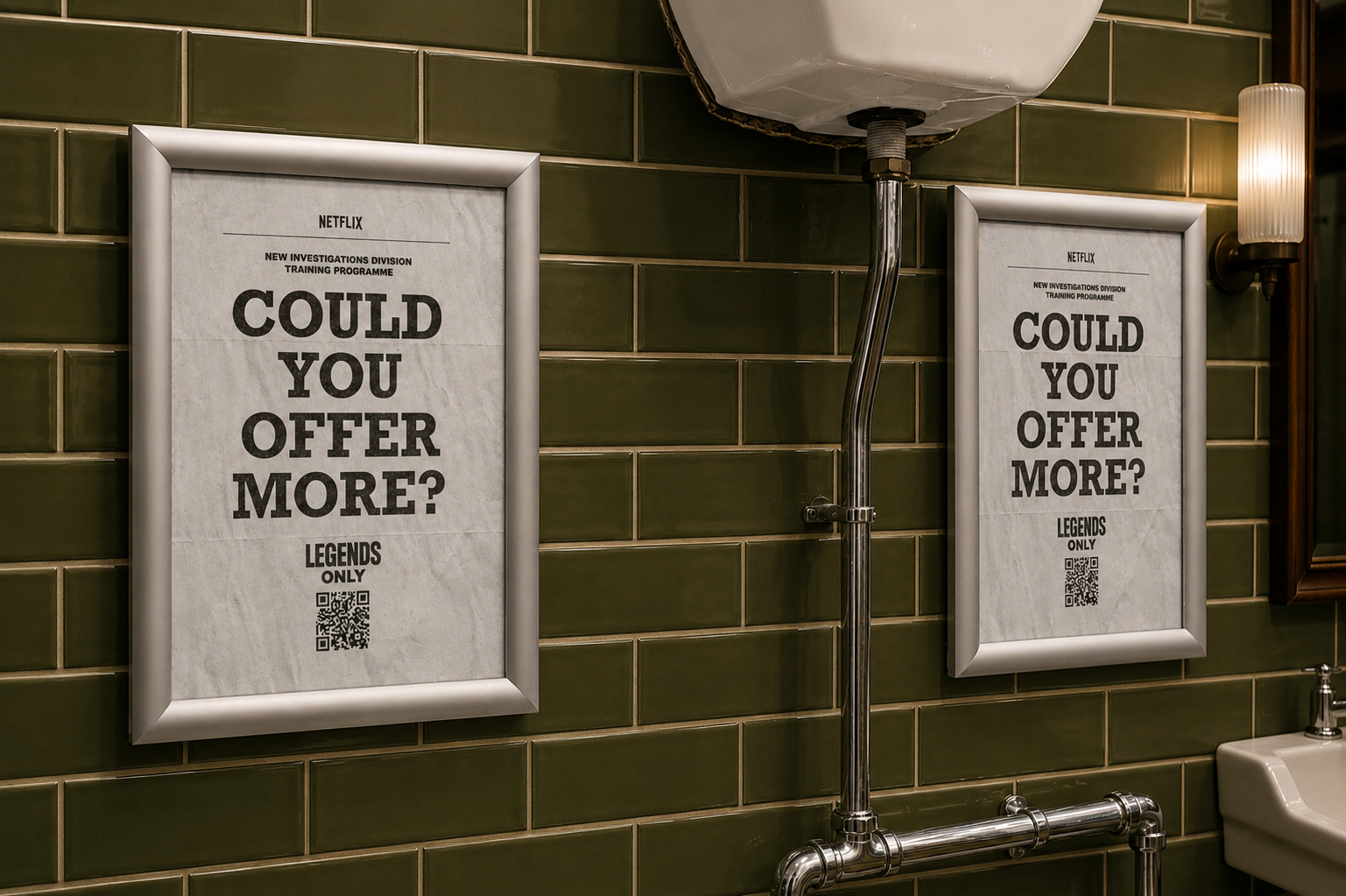
Here's a genuinely rare thing in 2026: a captive human being with nothing to look at. No feed, no notification, no one to talk to. Just the wall in front of them and whatever's framed on it. That's what a washroom panel buys, and it's worth more than the format ever gets credit for. This is where you put the message that needs the full sentence read, not skimmed, the QR code someone has time to actually scan rather than photograph and forget, the copy that's slightly too dense for a glance-and-go format to carry. It reaches everyone too, no age or demographic skew, and can be split by gender when the brief needs it. Pair it with a beer mat in the same venue and you've got two entirely different kinds of attention working the same room.
A starting point, not a rulebook
None of this is exact science, and the strongest campaigns we run rarely sit on a single format. But if you're staring at a blank media plan, here's roughly how we'd start thinking about it:
Common questions
Do I have to pick just one format? No. The best campaigns almost never do. Two formats hitting two different moments in someone's day beats one format shouting louder.
Which format gets the best return? Wrong question until you've answered a different one: what are you actually trying to do? Coffee cups and pharmacy bags carry proven uplift for brand-direct campaigns chasing sales. For public sector and charity briefs, trust and reach are the return, and pharmacy bags and washroom panels do the heavy lifting there.
Get in touch before you lock the plan. We'll tell you which combination will actually do the job, not just which one looks best on a media pack.