DBT Minimum Wage on Beer Mats
Three and a half million low-paid workers saw their wages rise on the 1st April this year.
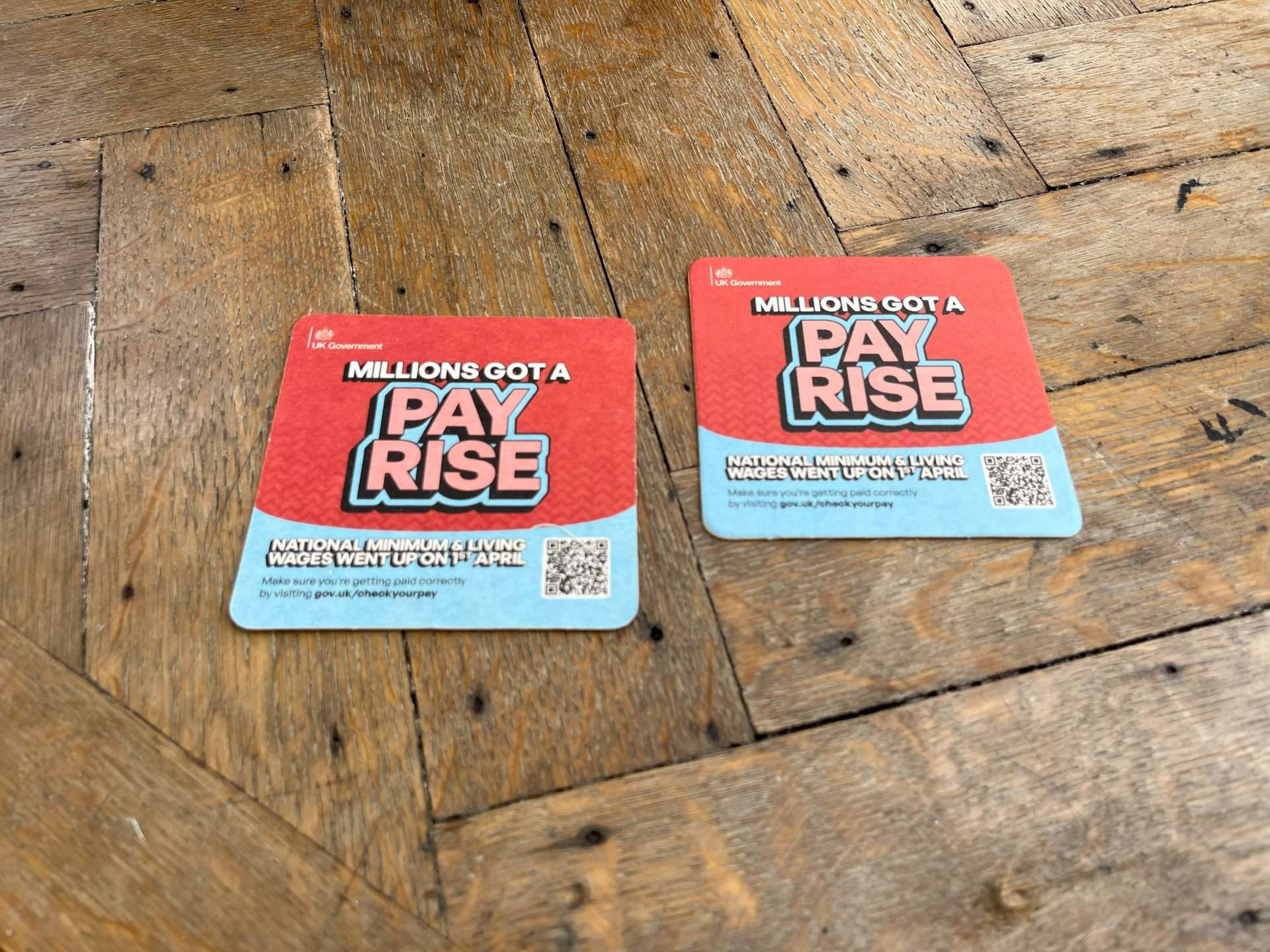
The DBT are advertising this on Beer Mats, a savvy way to raise awareness. It’s accessible, unpretentious, and likely to reach exactly the kind of people who need to see it—young workers, part-time staff, pubgoers, and employees alike.
Placing important messages in casual, everyday settings can dramatically improve public awareness. It lowers the barrier to engagement, especially for people who don’t regularly interact with official channels.
Direct reach: Pubs and Bars see thousands of customers every week. They are a direct connection to both workers and employers in industries like hospitality, where minimum wage rules are highly relevant.
Conversation starter: A bold message on a beer mat sparks curiosity and chat. It might just prompt a worker to ask their manager about their rights—or remind an employer to double-check payroll compliance.
The Beer Mats include a QR code for people who want to find out more, like whether they’re being paid fairly or how to report underpayment. It’s designed to be instantly digestible, even if you’re halfway through a pint of lager.
The National Living Wage paid to over-21s went up by 6.7% from £11.44 an hour to £12.21. The government said the increase was worth £1,400 a year for an eligible full-time worker. The National Minimum Wage for 18 to 20-year-olds rose by 16%.
Younger employees – aged between 16 and 20, external – receive the National Minimum Wage. For 18, 19 and 20-year-olds, it rose from £8.60 an hour to £10 on 1 April.
The government said the increase is worth £2,500 for an eligible full-time worker. For 16 and 17-year-olds, the National Minimum Wage rose from £6.40 an hour to £7.55, an 18% increase.